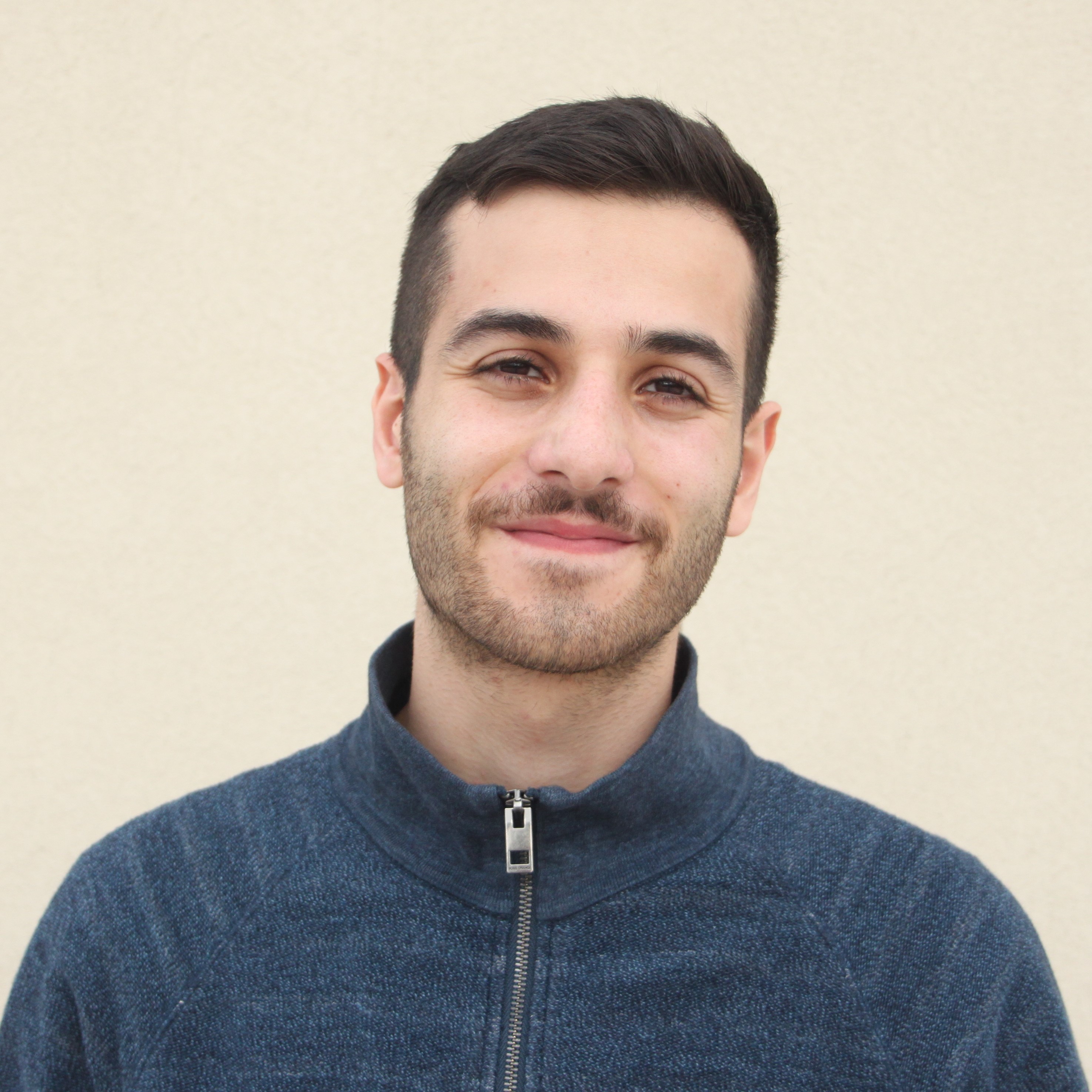
About Me
I’m Mohamad Kazma, a Postdoctoral Scholar in the Department of Civil and Environmental Engineering at Vanderbilt University, where I also completed my PhD in Civil Engineering in 2026. I received my B.Eng. degree in Civil Engineering from Notre Dame University-Louaize, Lebanon, in 2019, and my M.Sc. degree in Civil Engineering from Vanderbilt University in 2024. My research develops scalable, control-theoretic frameworks for monitoring and informing decisions about built and natural infrastructure networks under partial sensing, uncertainty, and physical constraints.
I completed my PhD in August 2026 under the supervision of Dr. Ahmad F. Taha in the Department of Civil and Environmental Engineering at Vanderbilt University. My dissertation, Advances in Observability for Nonlinear Networks: Theory and Application, addresses sensor allocation, observability quantification, stability analysis, network partitioning, and probabilistic node selection for nonlinear and differential-algebraic systems, with validations on power grids, water distribution networks, and combustion reaction networks. A detailed overview of my research themes and applications is available on the Research page.
Current Position
Vanderbilt University, Postdoctoral Scholar — Aug. 2026 – Present
Department of Civil and Environmental Engineering, School of Engineering, Nashville, TN
Dissertation
Advances in Observability for Nonlinear Networks: Theory and Application — Defense passed May 12, 2026
Advisor: Dr. Ahmad F. Taha (Dept. of Civil and Environmental Engineering)
Committee: Dr. Ahmad F. Taha (Chair), Dr. Thomas Beckers, Dr. Sankaran Mahadevan, Dr. Daniel Work
Education
Vanderbilt University
PhD, Civil Engineering — Jan. 2022 – Aug. 2026
MSc, Civil Engineering — Jan. 2022 – Dec. 2024
Notre Dame University-Louaize
BEng, Civil and Environmental Engineering — Jan. 2015 – May 2019
Contact
JH261, 2301 Vanderbilt Place
Nashville, TN
Research Experience
Graduate Research Assistant, Vanderbilt University — Jan. 2022 – Aug. 2026
Department of Civil and Environmental Engineering. Supported by Dr. Taha’s NSF CAREER Award No. 2152450, Scheduling Driving Sensing and Control Nodes in Nonlinear Networks, and NSF Award No. 2151392, Collaborative Research: Joint Control of Hydraulics and Water Quality Dynamics in Drinking Water Networks (both NSF Division of Civil, Mechanical, and Manufacturing Innovation). Research on modeling, optimization, and monitoring of large-scale nonlinear dynamical systems representing complex infrastructure networks: control-theoretic and submodular algorithms for observability and monitoring, water quality sensor placement in drinking water networks, uncertainty quantification for infrastructure resilience, and joint control of hydraulics and water quality.
Research Assistant, Notre Dame University-Louaize — Jun. 2019 – Dec. 2021
Department of Civil and Environmental Engineering. CNRS-funded project on the impact of integrating solar thermal panels in Lebanese buildings on the indoor environment (supervised two experimental test rooms and developed a TRNSYS numerical model), and an IP-valorization funded project on concrete masonry units enhanced with phase changing materials (thermal and mechanical testing and building performance simulation).
Research Interests
My research is at the intersection of control and dynamical systems theory, combinatorial and submodular optimization, with applications to large-scale built and natural infrastructure networks. Topics of interest include: (i) observability, controllability, and safety (control barrier functions) for nonlinear and differential-algebraic systems (representing most real-world systems); (ii) sensor and actuator allocation in networked systems; (iii) uncertainty quantification and propagation in large-scale infrastructure networks; (iv) submodular and combinatorial optimization for monitoring and control; (v) scalable network partitioning and clustering; and (vi) probabilistic node selection.
Infrastructure application areas include power grids (transmission and renewable-integrated networks), drinking water distribution networks (quality and hydraulic dynamics), coupled hydrologic and hydrodynamic systems (overland flow and infiltration in watersheds), and energy balance models for climate.
Teaching
Vanderbilt University
CE 3300: Risk, Reliability, and Resilience Engineering (SP2025)
Instructor: Dr. Hiba Baroud — Taught 6 of 12 modules on probability and statistical inference using R.CE 6380-01: Applied Machine Learning (SP2024)
Instructor: Dr. Sankaran Mahadevan — Covered modern ML methods with Python for science and engineering.
Notre Dame University-Louaize
- Drilling & Production Engineering Lab, PEN 472 (FA2021)
- Environmental Engineering Lab, CEN 365 (SP2020 – SP2021)
Awards & Certifications
- Certified Associate in Project Management (CAPM®), Expired July 2024
- Selected for the 2020 IP Valorization Grants Program at Berytech — Innovation Voucher ($25,000)
- Co-recipient, ELCIM–IRI Center of Innovation and Technology Innovation Voucher ($6,000) for project “Concrete Masonry Units Enhanced with Phase Changing Materials”
- 2nd place team, ASCE 2019 Popsicle Bridge Competition (Lebanon)
Mentoring
2025 – Present
- Gavin K. Blair — PhD student, Vanderbilt University. Research connecting control with climate energy balance models and water networks; first author of Sunlit and Unlit: The Limitations of Albedo Prediction in Energy Balance Models (under review at GMD).
Summer 2026 — Clark Scholars Program, Vanderbilt University
- Sarmad A. Salman — Undergraduate, Electrical Engineering. Project on transportation networks.
- Yantak Chu — Undergraduate, Civil Engineering. Project on water distribution networks.
- Mohammad Habib — Undergraduate, Civil Engineering. Project on water distribution networks.
Summer 2025
- Sparsh Amarnani — M.S. student, Computer Science, Vanderbilt University. Project on zoning of water distribution networks for water quality control.
Invited Talks
- Scalable Control Engineering for Built and Natural Infrastructure Networks — KTH Royal Institute of Technology, Division of Decision and Control Systems, Harry Nyquist Room, Stockholm, Sweden. June 8, 2026. [Slides]
Conference Presentations
- Multilinear Extensions in Submodular Optimization for Optimal Sensor Scheduling in Nonlinear Networks — American Control Conference (ACC 2025), Denver, CO. July 2025. [Slides]
- Generalizable Stability Metrics for Power Grids — American Control Conference (ACC 2025), Denver, CO. July 2025. [Slides]
- Controllability Gramians Make Water Safer: Water Quality and Hydraulic Regulation in Drinking Networks — American Control Conference (ACC 2025), Denver, CO. July 2025. [Slides]
- On Placement of Water Quality Sensors for Nonlinear Multi-Species Models in Drinking Networks — ASCE EWRI World Environmental and Water Resources Congress 2024, Milwaukee, WI. May 2024.
- Smarter Pump Scheduling Can Improve Water Quality Dynamics in Distribution Networks — ASCE EWRI World Environmental and Water Resources Congress 2024, Milwaukee, WI. May 2024.
- State-Robust Observability Measures for Sensor Selection in Nonlinear Dynamic Systems — IEEE Conference on Decision and Control (CDC 2023), Singapore. December 2023. [Slides]
- Optimal Placement of PMUs in Power Networks: Modularity Meets A Priori Optimization — American Control Conference (ACC 2023), San Diego, CA. June 2023. [Slides]
- Revisiting the Optimal Sensor Placement Problem in Power Networks — INFORMS Annual Meeting 2022, Indianapolis, IN. October 2022.
Academic Service
Journal Reviewer: IEEE Transactions on Power Systems, IEEE Control Systems Letters, Automatica, Journal of Water Resources Planning and Management, IEEE Transactions on Automatic Control, IFAC Control Engineering Practice, IEEE Transactions on Control of Network Systems, Systems & Control Letters, IEEE Transactions on Control Systems Technology, IEEE Transactions on Smart Grid, IEEE Transactions on Systems, Man, and Cybernetics: Systems, Water Resources Research, Water Resources Management, The Journal of Supercomputing, Engineering with Computers
Conference Reviewer: IEEE PES General Meeting, IEEE Conference on Decision and Control (CDC), American Control Conference (ACC)
Conference Volunteer: Staff Support Volunteer, 2021 IEEE Conference on Decision and Control (CDC)
Professional Memberships: Member of IEEE and ASCE; IEEE Control Systems Society, IEEE Power & Energy Society, IEEE Systems, Man, and Cybernetics Society
Technical Skills
Programming: Python, MATLAB, R, Julia, LaTeX
Optimization: CVX, Gurobi, CPLEX, YALMIP, SeDuMi
Software: EPANET, PowerWorld, GAMS, GitHub, Power BI, Tableau, ANSYS, Abaqus, SAP2000, AutoCAD, Civil 3D, TRNSYS-18, Primavera P6, MATPOWER, Cantera, QGIS
Machine Learning: TensorFlow, PyTorch, Scikit-learn
Decision Analysis: Palisade Suite (Evolver, @Risk)
Languages: Arabic (Native/Fluent), English (Fluent)
Curriculum Vitae
My CV is available here.